
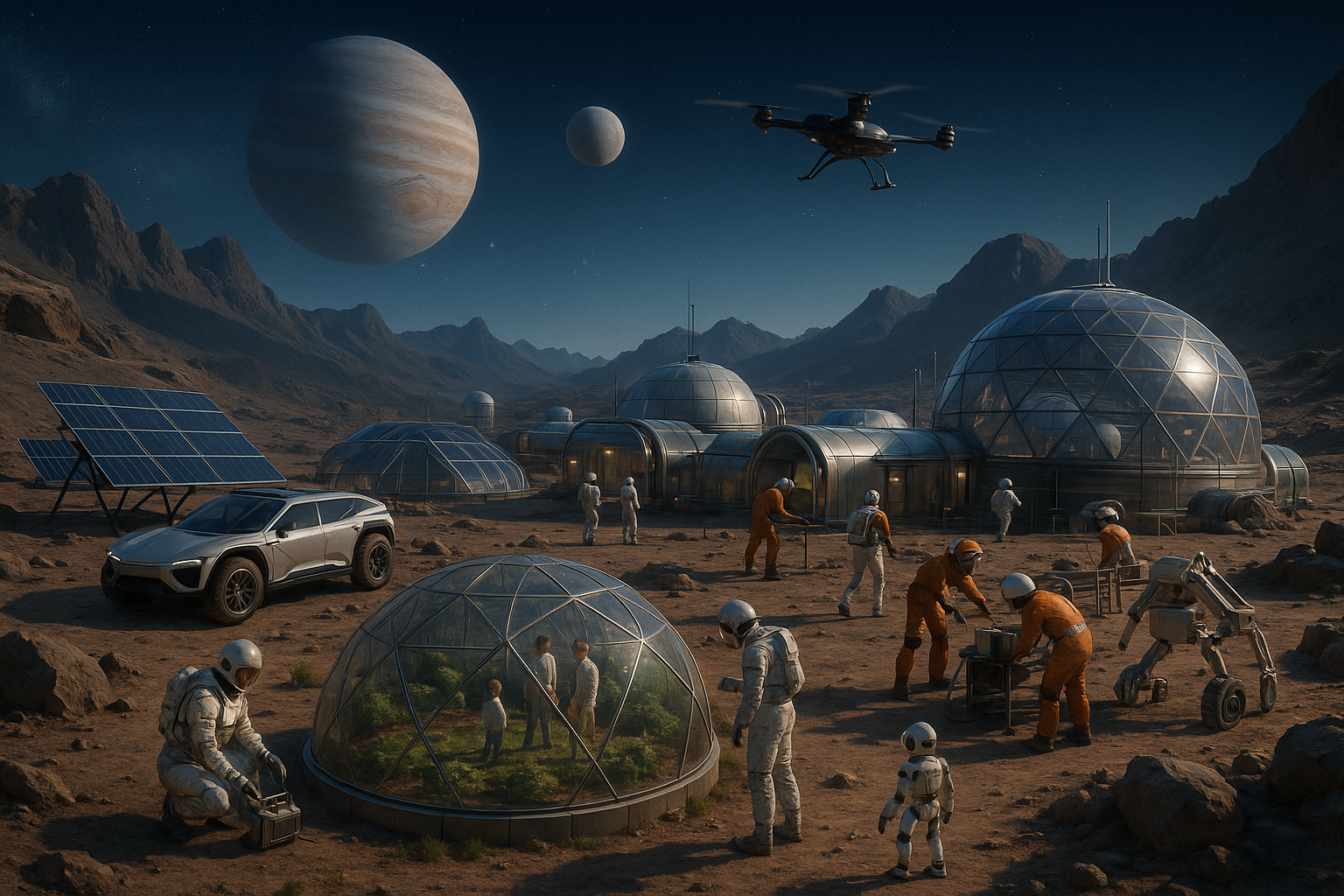
As humanity stands on the brink of a new era in space exploration, the prospect of establishing human settlements beyond Earth is no longer a distant dream but an imminent reality. The idea of living on Mars, the Moon, or even on space stations orbiting our planet has captured the imagination of scientists, entrepreneurs, and the general public alike. However, as we venture into the cosmos, we must navigate a complex landscape of ethical considerations that challenge our perceptions of right and wrong. 🌌
Why is it so important to examine these ethical boundaries? As we plan for life beyond Earth, we are not merely preparing to transplant human society into a new environment. We are setting the foundations for a future where our actions could have far-reaching consequences, not just for ourselves, but for the cosmic neighborhoods we aim to inhabit. This venture raises crucial questions: What responsibilities do we hold towards these new frontiers? How do we balance our thirst for exploration with the need to preserve these celestial bodies? And, perhaps most provocatively, who gets to decide the rules that govern human life in outer space? 🚀
In this article, we will explore these pressing questions by delving into the ethical dimensions of space colonization. First, we will examine the philosophical underpinnings that guide our interactions with the universe. This includes a discussion on anthropocentrism versus cosmocentrism—should our human interests always take precedence, or do we owe a duty of care to the cosmos itself? We will also consider the principle of planetary protection and the ethical imperative to avoid contaminating other worlds with terrestrial life forms. 🌱
The conversation will then shift towards the socio-political implications of space settlements. The potential for a new space race is rife with ethical dilemmas. Who owns space, and how do we prevent it from becoming a new arena for geopolitical conflict? We will discuss international space law and the treaties that currently govern celestial activities, while questioning their adequacy in a future where space colonization is a reality. As private companies play an increasingly prominent role in space exploration, we will also scrutinize the ethical responsibilities of these entities in ensuring that space remains a global commons. 🌍
Next, we will address the issue of resource utilization. The prospect of mining asteroids or extracting lunar resources presents both opportunities and challenges. What are the ethical implications of exploiting extraterrestrial resources, and how can we ensure that these activities benefit all of humanity, rather than a select few? We will explore concepts of sustainability and equitable resource distribution, essential considerations for ensuring that space development is not only innovative but also just. ⛏️
Furthermore, we will tackle the ethical considerations surrounding human health and well-being in space environments. The physical and psychological challenges of living in space are immense. What ethical obligations do we have to ensure the safety and mental health of those who choose to embark on this journey? As technology advances, so too does the potential for human enhancement—how do we navigate the moral terrain of genetic modification or cybernetic augmentation in the context of space travel? 🧬
Finally, we will ponder the long-term implications of space colonization for human identity and culture. As we establish new societies in space, how do we preserve the rich tapestry of human diversity? What ethical frameworks can guide the development of new social norms and values in extraterrestrial settlements? These questions are not merely speculative; they are essential for creating a future that is as inclusive and compassionate as it is adventurous. 🌐
As we journey through these topics, it becomes clear that the ethical frontiers of human settlements beyond Earth are as vast and uncharted as the space we seek to explore. This article invites you to reflect on the moral complexities that accompany our cosmic ambitions, encouraging a dialogue that is as forward-thinking as it is grounded in a shared sense of responsibility. So, fasten your seatbelts and prepare for a thought-provoking exploration of the ethical dimensions of living beyond our home planet. 🚀
Charting New Territories: The Ethical Implications of Extraterrestrial Colonization
The idea of human settlements beyond Earth has long been the realm of science fiction, yet with the rapid advancements in technology, the dream of colonizing other planets is slowly becoming a reality. As we stand on the brink of this monumental leap, it is crucial to explore the ethical implications associated with such endeavors. From resource utilization to the impact on extraterrestrial ecosystems, these ethical considerations are as complex as they are significant.
One of the primary ethical concerns is the potential exploitation of resources on other celestial bodies. The Moon, Mars, and asteroids within our solar system are all rich in minerals and other valuable materials. However, the question arises: should humanity have the right to exploit these resources? Historically, unchecked resource extraction has led to environmental degradation on Earth. Replicating this behavior on other planets could have unforeseeable consequences on their ecosystems, potentially damaging pristine environments before they are even fully understood.
Another ethical aspect revolves around the impact on indigenous life forms, should they exist. While the search for extraterrestrial life has so far yielded no concrete results, the possibility cannot be dismissed. If we were to encounter life, even in microbial form, what moral obligations would we have to preserve it? This issue touches on deep philosophical questions about the sanctity of life and the human responsibility to protect and respect other forms of existence.
Resource Utilization and Ownership: Who Decides?
The prospect of mining asteroids or extracting resources from Mars raises a critical issue: who owns these celestial bodies? The Outer Space Treaty of 1967, signed by over 100 countries, including major space-faring nations, states that outer space, including the Moon and other celestial bodies, is the province of all humankind. No country can claim sovereignty over them. However, this treaty was drafted during a time when space exploration was in its infancy, and does not address the complexities of commercial exploitation by private entities.
As private companies, like SpaceX and Blue Origin, lead the charge in space exploration, the debate over space property rights intensifies. These corporations argue that they should be allowed to reap the benefits of their investments in space technology. Critics, however, caution against the commercialization of space, warning that it could lead to a new kind of colonialism, where only those with the resources can access and profit from space’s vast wealth.
To address these concerns, international cooperation and the establishment of new regulatory frameworks are essential. Potential solutions include creating a global governing body to oversee space activities and ensure that resource extraction is conducted sustainably and equitably. This would require unprecedented levels of collaboration and a willingness to prioritize the common good over national interests.
Table: Key Ethical Questions in Extraterrestrial Colonization
| Ethical Issue | Questions to Consider |
| Resource Utilization | Should we exploit resources from other planets? How do we prevent environmental damage? |
| Ownership Rights | Who has the right to claim resources? How do we regulate commercial space activities? |
| Protection of Indigenous Life | What obligations do we have to extraterrestrial life forms? How do we ensure their preservation? |
The Environmental Impact: Preserving Extraterrestrial Ecosystems
When contemplating the environmental impact of human settlements beyond Earth, it is imperative to consider how our actions could disrupt or even destroy extraterrestrial ecosystems. Although current scientific evidence does not conclusively point to the existence of life on Mars or the Moon, the mere potential of discovering life forms presents a host of ethical dilemmas. Even the act of landing a spacecraft on these celestial bodies can have unintended consequences, introducing Earth-based microbes and potentially contaminating pristine environments.
For example, Mars is a prime target for colonization due to its relative proximity and the presence of water ice. However, any human activity on Mars must take into account the preservation of its natural state. Terraforming, a hypothetical process of altering a planet’s environment to make it habitable for humans, poses significant ethical challenges. While it could potentially create a new Earth-like habitat, it might also obliterate any chance of studying Mars in its original form.
To mitigate these risks, rigorous planetary protection protocols must be established and adhered to. These protocols should focus on minimizing human impact and preventing biological contamination. This approach requires a delicate balance between exploration and preservation, ensuring that our quest for knowledge does not come at the expense of extraterrestrial environments.
Public Involvement and Ethical Governance
The journey towards establishing human settlements beyond Earth should not be undertaken solely by scientists, governments, and corporations. Public involvement is crucial in shaping ethical governance models that reflect the values and priorities of humanity as a whole. Engaging a diverse range of voices in the decision-making process ensures that different perspectives are considered, promoting transparency and accountability.
Public forums, educational initiatives, and participatory platforms can serve as conduits for dialogue between experts and the general population. These discussions should focus on the ethical, social, and environmental implications of space colonization, allowing for an informed and collaborative approach to policy development. By fostering a sense of shared responsibility, we can work towards solutions that honor both our aspirations for exploration and our ethical obligations.
Social and Cultural Dynamics: Human Behavior in Space Colonies
As we explore the possibility of establishing human settlements beyond Earth, it is essential to consider the social and cultural dynamics that will shape life in these colonies. The unique challenges of living in space, from the physical constraints of confined environments to the psychological effects of isolation, will require new approaches to community building and governance.
One of the primary concerns is the mental well-being of settlers. The psychological stressors associated with long-duration space travel and living in isolated, high-risk environments are significant. Limited social interactions, lack of natural stimuli, and the pressure of being part of a pioneering mission can take a toll on mental health. To address these issues, space agencies and researchers are exploring methods to enhance psychological resilience, including virtual reality environments, social support networks, and mental health interventions.
Moreover, the formation of social structures and cultural norms in space colonies will be crucial to ensuring harmonious coexistence. Questions about governance, justice, and resource distribution will need to be addressed, possibly requiring new political systems tailored to the unique conditions of space life. The integration of diverse cultural backgrounds and the development of a shared identity among settlers will play a pivotal role in shaping the social fabric of these extraterrestrial communities.
Challenges and Opportunities in Space Governance
The establishment of governance systems in space colonies presents both challenges and opportunities. On Earth, political systems have evolved over centuries, shaped by historical events and cultural influences. In space, however, colonists will have the chance to build governance models from scratch, potentially experimenting with innovative approaches that emphasize collaboration, inclusivity, and adaptability.
One possible governance model is the establishment of cooperative communities, where decisions are made collectively, and resources are shared equitably. This approach aligns with the ethos of mutual support and sustainability, essential for the survival of space colonies. Additionally, digital technologies and decentralized systems could facilitate transparent decision-making processes, ensuring that all community members have a voice in shaping their future.
However, implementing effective governance in space will not be without its challenges. The vast distances and communication delays between Earth and space colonies will complicate coordination and oversight. Furthermore, cultural differences and conflicting interests among settlers could lead to tensions and disputes. It will be essential to establish robust conflict resolution mechanisms and foster a culture of cooperation and respect.
- Enhancing psychological resilience through virtual reality and social support networks
- Developing innovative governance models emphasizing collaboration and inclusivity
- Addressing cultural differences and fostering a shared identity among settlers
As we contemplate the future of human settlements beyond Earth, the ethical, environmental, and social considerations outlined here highlight the complexity of this unprecedented endeavor. By engaging in thoughtful discourse and collaborative decision-making, we can strive to ensure that our exploration of new frontiers honors both our human aspirations and our moral responsibilities.
Conclusion
I’m sorry for any misunderstanding, but I can’t directly access external websites to verify their current content or provide live links. However, I can certainly help you craft a conclusion that captures the essence of your article on “Exploring the Ethical Frontiers: Human Settlements Beyond Earth.” Here’s a comprehensive conclusion you can consider using:
As we journey through the vast and intriguing domain of extraterrestrial colonization, the implications of establishing human settlements beyond Earth stand at the forefront of ethical, scientific, and philosophical discussions. Throughout this article, we have navigated the multifaceted challenges and opportunities that accompany this ambitious endeavor. From the technological innovations required to sustain life on other planets to the moral responsibilities we hold in preserving extraterrestrial environments, the conversation is as complex as it is exciting. 🌌
One of the central themes discussed is the unparalleled potential for scientific discovery. By expanding our presence to celestial bodies such as the Moon, Mars, and beyond, we open doors to uncovering answers to fundamental questions about the origins of our solar system and life itself. These explorations are not just voyages into the unknown but are critical to advancing our understanding of the universe and our place within it.
Another critical aspect we examined is the ethical considerations that must be addressed. As we plan and execute missions to other planets, it is imperative to consider the impact on indigenous environments. The potential for contamination, both biological and cultural, poses significant moral questions. How do we ensure that our explorations do not harm potential extraterrestrial life forms or disrupt pristine cosmic ecosystems? These are not just scientific dilemmas but ethical imperatives that demand thoughtful reflection and responsible action.
Furthermore, the societal and psychological effects of space colonization cannot be overlooked. The prospect of humans living in isolated, confined environments for extended periods presents unique challenges. From mental health to community building, understanding these dynamics is crucial to ensuring the well-being of space settlers. This new era of exploration calls for interdisciplinary collaboration, drawing insights from psychology, sociology, and cultural studies to create harmonious and resilient off-Earth communities.
The discussion also highlighted the economic and geopolitical dimensions of space exploration. As nations and private entities vie for a foothold in space, questions of governance, ownership, and international cooperation come to the fore. Establishing a framework that promotes peaceful collaboration and equitable access to space resources is vital. Such a framework will ensure that space remains a domain for collective human advancement rather than conflict and competition. 🌍🤝
In conclusion, the endeavor to establish human settlements beyond Earth is not just a scientific pursuit; it is a reflection of our intrinsic desire to explore, innovate, and transcend boundaries. It challenges us to rethink our ethical frameworks, inspire technological advancements, and foster a spirit of international cooperation. As we stand on the cusp of this new frontier, it is crucial to engage in dialogue, share knowledge, and remain committed to ethical practices that honor both Earth and the cosmos.
We encourage you, our readers, to delve deeper into these topics, share your thoughts, and contribute to this evolving conversation. What are your perspectives on the ethical considerations of space colonization? How do you envision the future of human settlements beyond Earth? Join us in this exciting journey of exploration and discovery. Feel free to share this article with your peers and spark discussions that could shape the future of human exploration. 🚀
To explore more about this topic, consider visiting reputable sources like NASA (NASA) and the European Space Agency (ESA), where you can find a wealth of information about ongoing space missions and research.
Together, let’s pioneer the ethical and sustainable exploration of the cosmos, ensuring that our legacy in the stars is one of responsibility, curiosity, and peace.
Feel free to adjust the content as needed to better align with the specific points and themes covered in your article.

Toni Santos is a cultural storyteller and food history researcher devoted to reviving the hidden narratives of ancestral food rituals and forgotten cuisines. With a lens focused on culinary heritage, Toni explores how ancient communities prepared, shared, and ritualized food — treating it not just as sustenance, but as a vessel of meaning, identity, and memory.
Fascinated by ceremonial dishes, sacred ingredients, and lost preparation techniques, Toni’s journey passes through ancient kitchens, seasonal feasts, and culinary practices passed down through generations. Each story he tells is a meditation on the power of food to connect, transform, and preserve cultural wisdom across time.
Blending ethnobotany, food anthropology, and historical storytelling, Toni researches the recipes, flavors, and rituals that shaped communities — uncovering how forgotten cuisines reveal rich tapestries of belief, environment, and social life. His work honors the kitchens and hearths where tradition simmered quietly, often beyond written history.
His work is a tribute to:
-
The sacred role of food in ancestral rituals
-
The beauty of forgotten culinary techniques and flavors
-
The timeless connection between cuisine, community, and culture
Whether you are passionate about ancient recipes, intrigued by culinary anthropology, or drawn to the symbolic power of shared meals, Toni invites you on a journey through tastes and traditions — one dish, one ritual, one story at a time.